Introduction
Built on a modular, globally integrated architecture with a single chain of custody, the platform unifies suppliers, ports, carriers, warehouses, and last-mile delivery into one synchronized execution environment. Every movement, decision, and dependency is captured within a real-time execution graph and global event fabric—creating a continuous stream of operational intelligence that eliminates blind spots, compresses latency, and replaces guesswork with precision.
At the core of Supply Chain OS is a powerful AI command architecture—comprised of domain-specific command engines, orchestration layers, financial intelligence systems, and a coordinated network of autonomous agents. These systems continuously analyze and optimize routing, inventory positioning, labor allocation, capacity utilization, pricing dynamics, and cross-modal flow in real time. Through native robotics and mobility control layers, the platform directly orchestrates end-of-line packaging systems, warehouse robotics, autonomous material handling, and intelligent fleet operations—bridging digital intelligence with physical execution. Enterprises operate across **four modes—Autonomous, Governed, Hybrid, and Manual—**enabling controlled progression toward full autonomy without operational disruption.
This platform doesn’t just respond—it predicts, simulates, and acts ahead of reality. A fully realized Global Digital Twin mirrors your entire supply chain in real time, enriched with advanced 3D modeling and augmented reality interfaces that transform complex operations into immersive, interactive control environments. Beneath this sits a continuous simulation layer running parallel scenarios—evaluating cost, service, risk, and throughput outcomes simultaneously. At the center of this capability is a proprietary Decision Switching Engine, which dynamically determines when to maintain execution or shift strategies—autonomously recalibrating operations to prevent disruption before it occurs.
A unified multi-agent intelligence framework, powered by over 100 specialized AI agents, operates as a synchronized digital workforce—detecting disruptions, resolving exceptions, negotiating constraints, and coordinating execution across every node. This extends beyond traditional infrastructure into autonomous delivery technologies, including drone networks, quad-based mobility systems, and intelligent transportation fleets—all governed within the same execution fabric.
Supply Chain OS also introduces Digitized Private Network infrastructure through ALOS (Autonomous Logistics Operating System)—a secure, blockchain-enabled environment that connects shippers, carriers, and third-party logistics providers into a unified, programmable execution network. Within ALOS, transactions, tenders, capacity, and operational workflows are digitally synchronized, enabling real-time collaboration, automated settlement, and fully transparent chain-of-custody across all participants. This transforms fragmented partner ecosystems into a single, intelligent logistics network, unlocking new levels of trust, speed, and coordination at a global scale.
Together, these systems form a self-optimizing, continuously learning supply chain intelligence layer—integrating humans, robotics, and autonomous mobility into a single, globally synchronized operating system.
BANKING AND FINANCING
Supply Chain OS™ embeds a powerful layer of banking and financing infrastructure directly into your logistics operations, transforming how supply chains are funded and scaled. Through integrated lines of credit, trade financing, and equipment financing solutions, customers gain immediate access to capital aligned with real-time operational activity.
Instead of relying on disconnected financial institutions and delayed approvals, Supply Chain OS enables on-demand liquidity tied to shipments, inventory, and network performance. This allows shippers, carriers, and logistics providers to unlock working capital, accelerate growth, and execute with greater speed and confidence.
By synchronizing financial capability with operational intelligence, Supply Chain OS eliminates friction between execution and funding—ensuring that capital is always available exactly where and when it’s needed.
This is not external financing. It is an embedded financial infrastructure for modern supply chains.
RECEIVABLES FACTORING
Supply Chain OS™ embeds receivables factoring directly into logistics execution, giving carriers and logistics service providers immediate access to working capital on traditionally tendered shipments. Instead of waiting on standard payment terms, approved invoices can be converted into same-day liquidity, enabling faster reinvestment into operations, fleet utilization, and capacity growth.
For shipper-direct cargo, factoring is available whether executed by the broker or the carrier. The shipper is not required to be a Supply Chain OS customer; however, non-platform shippers must complete a structured approval process prior to eligibility. When the shipper is an active Supply Chain OS customer, preferred factoring rates apply, reducing the standard factoring percentage and improving overall economics.
For shipments tendered through a brokerage, freight forwarder, or consolidator, both the logistics service provider and the carrier must be active, in-good-standing Supply Chain OS customers to access factoring services. This ensures all transactions occur within a verified, secure, and performance-driven network.
Because factoring is natively embedded within Supply Chain OS, shipment data, proof of delivery, billing validation, performance history, and safety and compliance intelligence are all verified in real time—significantly reducing risk and accelerating approval cycles.
This is intelligent, risk-aware liquidity—seamlessly integrated into the operational fabric of modern logistics.
BANKING | ePAYMENTS
- Line of Credit
- Trade Financing
- Equipment Financing
- Receivables Factoring
- ePayments
BLOCKCHAIN I PHI COIN
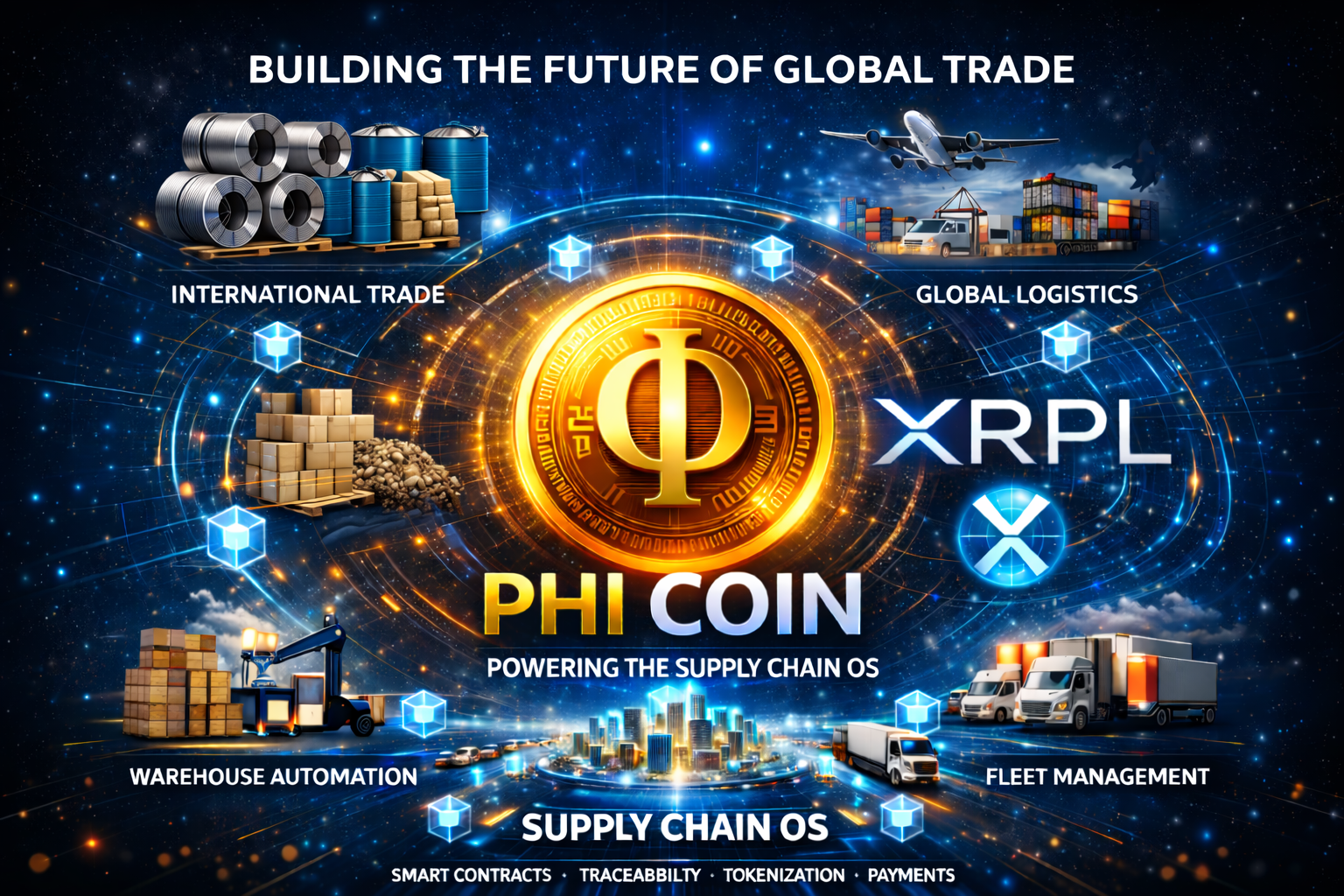
Supply Chain OS™ introduces a secure, private blockchain infrastructure (ALOS) purpose-built for global logistics—delivering a new standard of trust, transparency, and speed in how freight is tendered, executed, and settled.
Unlike public blockchain environments, ALOS operates as a permission-based network where only verified shippers, carriers, brokers, and logistics providers can transact. Every shipment, milestone, and financial event is recorded on an immutable, shared ledger, creating a single source of truth across all participants. This eliminates disputes, reduces fraud, and ensures that every transaction is fully auditable, synchronized, and secure.
At the center of this ecosystem is PHI Coin, a utility-driven digital instrument designed to enable instant, synchronized settlement across the network. PHI Coin is not speculative in nature—it is structured for stability, predictability, and operational efficiency, directly tied to real supply chain activity. As transaction volume and network adoption increase, the utility and demand for PHI Coin scale naturally with it—aligning value with real-world logistics execution rather than market speculation.
Through ALOS, payments are no longer delayed by traditional invoicing cycles. Transactions can be executed in real time or on programmable terms, dramatically improving cash flow, reducing administrative overhead, and strengthening trust between trading partners.
We recognize that transitioning from traditional processes requires confidence. Supply Chain OS supports a dual-environment approach, allowing customers to operate with familiar payment methods while gradually adopting blockchain-based workflows at their own pace—without disruption.
As adoption grows, ALOS and PHI Coin will not replace logistics processes—they will elevate them, establishing a faster, more secure, and more transparent standard for global freight execution.
This is the evolution of logistics—from fragmented transactions to real-time, trusted, and synchronized commerce.